Source Bioclimatic Pergola for Garden, Patio, and Hotel
Explore 28 Bioclimatic Pergola options featuring adjustable louver roofs, waterproof designs, and smart APP control. Compare specifications for aluminum alloy frames, wind resistance, and optional accessories like LED lights and zip screens to find the right solution for your outdoor space.
Key considerations
Products List


Garden Pergola Gazebo Aluminum Pergola Bioclimatic Roof Bioclimatica Outdoor
$80.00 - $160.00
MOQ: 9 Square Meters

Waterproof Outdoor Garden Aluminum Pergola Gazebo Bioclimatic Roof Pergola Bioclimatica
$80.00 - $160.00
MOQ: 9 Square Meters

Modern Outdoor Garden Aluminum Pergola Gazebo Bioclimatic Roof Pergola Bioclimatica Factory
$80.00 - $160.00
MOQ: 9 Square Meters

Functional Bioclimatica Pergola Featuring an Aluminum Roof for Garden Outdoor Living
$80.00 - $160.00
MOQ: 9 Square Meters

Durable Aluminum Pergola for Outdoor Garden Shade with Bioclimatic Roof
$80.00 - $160.00
MOQ: 9 Square Meters

Elegant Bioclimatica Pergola Featuring an Aluminum Roof for Garden Outdoor Spaces
$80.00 - $160.00
MOQ: 9 Square Meters

Customized Sunshade Waterproof Outdoor Bioclimatic Aluminum Pergola
$225.00 - $300.00
MOQ: 5 Square Meters

Easy to Install Reusable Aluminium Material Bioclimatic Pergolas Garden House Attached Pergola
$225.00 - $300.00
MOQ: 5 Square Meters

Modern Bioclimatic Pergola Waterproof Outdoor Pergola for Garden and Terrace
$40.99 - $49.99
MOQ: 1 Square Meters
Shouguang Runchen Environmental Protection Technology Co., Ltd.


Aluminum Pergola Pergola Aluminum Motorized Bioclimatic Pergolas Garden Gazebos
$180.00 - $210.00
MOQ: 10 Square Meters

Factory Bioclimatic Design Waterproof Adjustable Aluminum Pergola
$120.00 - $135.00
MOQ: 10 Square Meters

Aluminum Pergola Wholesale Outdoor Bioclimatic Louvered Aluminum Pergola
$180.00 - $210.00
MOQ: 10 Square Meters


Aluminum Bioclimatic Pergola with Manual Louvre Roof for Garden Backyard
$75.00 - $169.00
MOQ: 6 Square Meters

Modern Aluminum Bioclimatic Pergola with Adjustable Louvre Roof for Residential Backyard
$199.00 - $215.00
MOQ: 6 Square Meters


Waterproof Aluminum Bioclimatic Automatic Garden Pergola with LED Light
$75.00 - $139.00
MOQ: 9 Square Meters


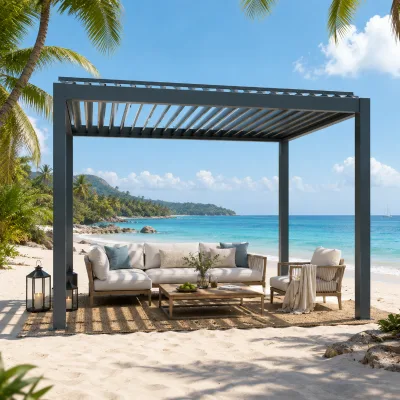
Comprehensive Sourcing Guide
Bioclimatic Pergola Sourcing Guide
Bioclimatic pergolas represent a sophisticated category of outdoor architectural structures designed to adapt dynamically to changing weather conditions while providing durable shade and shelter. These systems typically feature adjustable louvers that can be rotated to control sunlight penetration and rain ingress, offering a functional alternative to traditional static pergolas or retractable awnings. The core value proposition lies in their ability to transform an outdoor space into a usable area year-round, effectively extending the living footprint of residential or commercial properties without the need for permanent enclosure.
When sourcing these units, buyers must distinguish between motorized electric systems and manual operation mechanisms, as this distinction significantly impacts the complexity of installation and the required maintenance protocols. The market offers variations ranging from simple aluminum frames to fully integrated smart systems capable of remote control via mobile applications or sensors that automatically adjust the louvers based on wind speed or rainfall. Understanding the specific operational requirements of the intended site is essential before engaging with suppliers, as the integration of smart features necessitates reliable power sources and potentially more complex wiring infrastructure.
Product Scope and Observed Listing Signals
The observed product listings indicate a clear segmentation between standard aluminum alloy structures and specialized bioclimatic units with advanced functional capabilities. Buyers will encounter listings specifying frame materials such as Aluminum Alloy 6063-T5 or general aluminum, with finishing processes consistently described as powder-coated to ensure resistance against corrosion and UV degradation. The product scope extends to various configurations including motorized louvered pergolas, arched structures, and bridge-style installations, with specific models like OAAP001 and LRP6x8 appearing in the data, suggesting a range of standardized and custom-sized options available from manufacturers.
Listing signals reveal that these products are frequently marketed with specific performance attributes such as being rodent-proof, rot-proof, and waterproof, alongside claims of wind resistance and snow load capacity. The observed data highlights that while some units feature a poly cover with no coating, the dominant trend for bioclimatic applications involves adjustable louver roofs designed for all-season use in environments ranging from private gardens and swimming pools to commercial restaurants and hotel terraces. Buyers should note that while some listings mention specific dimensions like 120*120mm post sizes, the majority of suppliers emphasize the availability of customized sizes to fit unique architectural requirements.
Technical Specifications to Verify
Verification of the roof structure is the primary technical priority, as the defining feature of a Bioclimatic Pergola is its adjustable louver mechanism which must operate smoothly under various load conditions. Buyers should confirm the specific wind resistance class, with observed data citing Class 10-12 (approximately 100-120 km/h), and verify the snow load capacity, which ranges from 60 to 150 kg per square meter depending on the structural design and aluminum thickness. It is critical to ensure that the drainage system is integrated, often described as an internal gutter hidden drainage system, to prevent water accumulation and potential structural damage during heavy rainfall events.
The operational mechanism requires detailed scrutiny regarding the power source and control interface, as the market offers options ranging from remote controls to smart app integration and sensor-based automatic adjustments. Buyers must verify the compatibility of the motorized system with the local electrical grid and confirm the availability of optional accessories such as side curtains, LED strip lights, heaters, or sliding glass doors that may be required for the specific application. Additionally, the aluminum thickness should be confirmed as a customizable parameter, as the structural integrity of the louvers and frame is directly dependent on the gauge of the aluminum alloy used in the construction.
Compliance and Safety Documentation
Compliance documentation for bioclimatic pergolas must address both the structural safety of the installation and the electrical safety of the motorized components. The observed listings frequently cite certifications such as ISO9001, CE, SGS, and TUV, which serve as indicators that the manufacturer adheres to international quality management systems and product safety standards. Buyers should request specific test reports that validate the wind resistance and snow load claims, ensuring that the structural calculations align with local building codes and environmental conditions of the installation site.
Safety verification extends to the electrical components, particularly the motor and control systems, which must meet relevant electrical safety standards for outdoor use. Since these units are often installed in wet environments, the IP rating of the electrical components should be verified to ensure they are protected against water ingress. Buyers should also confirm that the powder-coated finish and the aluminum alloy material meet environmental and health standards, ensuring that no harmful substances are released during the manufacturing process or during the product's lifecycle in the outdoor environment.
Cost Drivers and Commercial Terms
The cost of bioclimatic pergolas is driven primarily by the complexity of the motorization system, the thickness of the aluminum alloy, and the extent of customization required for the specific site dimensions. While observed price ranges in the market span from approximately 40.99 to 899 USD, this wide variance likely reflects differences between small accessory components and full-scale structural installations, or potentially different unit pricing models such as per square meter versus per unit. Buyers should be aware that the inclusion of optional accessories like LED lighting, heating elements, or smart app integration will significantly increase the total project cost beyond the base frame price.
Commercial terms regarding lead time and minimum order quantities (MOQ) are critical factors in procurement planning, with observed data indicating a delivery time of 20-30 days after receiving the deposit and MOQs ranging from 1 unit to 60 units depending on the supplier. Some listings specify an MOQ of 9 square meters, suggesting that pricing may be volume-dependent for larger commercial projects. Buyers must clarify the packaging details, which typically involve bubble wrap and cartons for full container loads, to ensure that the products arrive without damage and to calculate the total shipping volume accurately.
Supplier Qualification and Quality Control
Supplier qualification should focus on verifying the manufacturer's production capacity and their history of delivering customized aluminum structures to international markets. The observed data indicates that many suppliers originate from Guangdong, China, a region known for its manufacturing capabilities in aluminum and outdoor furniture. Buyers should request evidence of the supplier's ability to handle custom orders, as the product scope includes customized sizes and specific design styles like modern aesthetics, which require flexible production lines and precise engineering.
Quality control protocols must be established to ensure that the powder-coated finish is uniform and durable, and that the motorized mechanisms are tested for longevity and reliability. Buyers should inquire about the warranty period, with observed listings offering 3-5 years, and clarify what specific components are covered under this warranty, such as the motor, the louvers, or the frame structure. It is also advisable to request samples or visit the factory to verify the quality of the aluminum alloy 6063-T5 and the precision of the assembly, ensuring that the final product meets the expected standards for wind resistance and waterproofing.
Long-Term Procurement Checks
Long-term procurement success depends on establishing a clear maintenance protocol and ensuring the availability of spare parts for the motorized and electrical components of the Bioclimatic Pergola. Buyers should verify the supplier's policy on after-sales support, including the availability of replacement motors, control boards, or louver blades in case of wear and tear or accidental damage. The complexity of the smart control systems means that software updates or firmware issues may arise, so it is essential to confirm that the supplier provides ongoing technical support and access to necessary software tools.
Sustainability and environmental resilience should be monitored over the product's lifecycle, particularly regarding the durability of the powder coating and the structural integrity of the aluminum frame under varying weather conditions. Buyers should track the performance of the drainage system and the wind resistance capabilities over time to ensure that the initial specifications hold up in real-world conditions. Establishing a relationship with a supplier who offers a comprehensive warranty and reliable spare parts supply chain will mitigate the risks associated with long-term ownership and ensure the pergola remains a functional asset for years.
FAQs
What certifications do bioclimatic pergolas typically have?
These pergolas often carry ISO9001, CE, SGS, and TUV certifications. Such documentation ensures the aluminum alloy frames meet international quality and safety standards for outdoor structures.
How long is the delivery time for custom orders?
Delivery usually takes 20 to 30 days after receiving the deposit. This timeline applies to customized aluminum pergolas shipped from factories in China or Guangdong.
Can the pergola roof be adjusted for weather conditions?
Yes, the roof features an adjustable louver structure for sunshade and rainproofing. It offers wind resistance up to 120 km/h and handles snow loads between 60 and 150 kg per square meter.
What materials are used for the frame and cover?
Frames are constructed from Aluminum Alloy 6063-T5 or standard aluminum. The cover material is typically poly, though some models feature powder-coated finishes for enhanced durability.
Which accessories are available for these pergolas?
Optional accessories include side curtains, LED strip lights, heaters, and sliding glass doors. These additions allow for smart APP control and enhanced comfort in all seasons.
What is the minimum order quantity for aluminum pergolas?
The minimum order quantity is 9 square meters for standard aluminum pergola units. Some suppliers may accept orders starting from 1 unit depending on the specific model configuration.
How are these pergolas packaged for shipping?
Products are packed in cartons with bubble wrap protection for full container loads. This packaging ensures the aluminum frames and components arrive safely without damage during transit.